Showing posts with label Video. Show all posts

Wednesday, November 9, 2016

Solar Power Lights Up Rural Bolivia

youtube{kFVXokOii9Y}

Published on Nov 9, 2016

How do you turn on a light at night when you’ve left the power grid far, far behind? In Bolivia, the solution is solar power. This is one of several case studies in the upcoming State of Energy Access Report, supported by the World Bank’s Energy Sector Management Assistance Program (ESMAP).

Solar panels are an economical option for more than 360,000 rural Bolivian households in remote areas that are not easily reached by power lines.

Read more ➤

Tuesday, November 8, 2016

Working Together to Grow a Green Economy

youtube{XmN_DpN9CNs}

Published on Nov 8, 2016

Integrating climate-smart agriculture into policies in Ethiopia across all levels and landscapes is key, not just for building greater resilience for farmers, but also for meeting our global climate goals.

Read more ➤

Modern Drying Houses Yield Improved Produce for Afghanistan Farmers

youtube{7IN0O8HNxCU}

Published on Nov 8, 2016

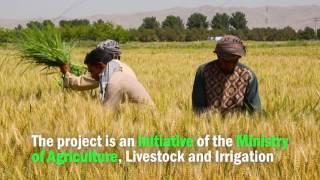
Farmers in Herat Province see the benefits of modern drying houses that produce better quality raisins in a shorter timer thus commanding higher prices in the market.

Over 300 modern raisin drying houses have been built across Afghanistan under the National Horticulture and Livestock Project, implemented by the Ministry of Agriculture, Irrigation, and Livestock.

Read more ➤

The Last Moment

facebookvid{557440561118364}

“The Last Moment” is a short film about a young woman leaving her family to find a job in Thailand to be able to pay the debts from their farm. She gets a job on a construction site but for years, she can't save enough money to visit home. She even missed the opportunity to say goodbye to her mother who passed away while she was in Thailand.

Mr. Voun Boren, the film’s director, won first place in the category of Best Short Films on Trafficking and Migration at the Chaktomuk Short Film Festival (CSFF) 2016.

#CSFF2016 was organized by Kon Khmer Koun Khmer កុនខ្មែរកូនខ្មែរ and we are proud to support this event through our Cambodia Countering Trafficking-in-Persons Program implemented by our partner Winrock International.

U.S. Embassy Phnom Penh, Cambodia

Read more ➤

Saturday, October 29, 2016

Vietnam has been sustaining high growth

facebookvid{1559388670753550}

Vietnam has been sustaining high growth and millions have been lifted out of poverty, but there are lingering issues. 

As we commemorate the International Day for the Eradication of #Poverty and #Vietnam’s Day for the Poor, think what’s the most important question you want to ask about reducing poverty in Vietnam. What do you want to know about ensuring equal opportunities? About social #inclusion? Shared prosperity? 

Post your questions at World Bank Vietnam and we will collect the top 5 questions asked within the next two days. 

World Bank Country Director Ousmane Dione’s responses will be posted in a video on October 24.

Read more ➤

Wednesday, October 26, 2016

Songs of Salt: Communities Learn to Adapt to Rising Sea Levels

youtube{JWxc_OdGgIg}

Published on Oct 26, 2016

With rising sea levels and salt water filling lands and killing crops and livestock, climate change is a daily threat to the lives of the 2.5 million Bangladeshis leaving on #Bangladesh’s southern coastline. Thanks to local non-governmental-organizations (NGOs), coastal communities are learning to cope and find sustainable sources of income.

Read more ➤

Clean Water the Key to Changing Lives in Rural Sri Lanka

youtube{AKHQF6JI-Tk}

Published on Oct 26, 2016

In Sri Lanka, women are assumed to be the main beneficiaries of projects improving the supply of water and management of sanitation. Women are traditionally responsible for cooking, cleaning, and taking care of the family and are highly affected by problems associated with water supply. During dry periods, women have to manage limited resources between household needs and for gardens surrounding their houses. Produce from gardens is an important contribution to food security. Women often have to share water with other households or walk great distances to find alternative sources.

The government of Sri Lanka is working to reduce the time women spend fetching water, the burden of carrying heavy loads, and the time spent taking care of children suffering from waterborne diseases. 

The Asian Development Bank aims for an Asia and Pacific free from poverty. Approximately 1.4 billion people in the region are poor and unable to access essential goods, services, assets and opportunities to which every human is entitled. Get involved. Share this video. Learn more and interact with ADB by visiting our subscriber services page or our website at http://www.adb.org

Read more ➤

Tonle Sap: Saving Cambodia's Great Lake

youtube{259zxMJEJrE}

Published on Oct 26, 2016

While Cambodia has made some progress in providing water and sanitation services to its people, in the country still has the lowest water and sanitation coverage in East Asia and one of the lowest in the world. Many still rely on groundwater abstraction, rainwater collection, or surface water for their water needs, while sanitation is almost nonexistent.

These problems are compounded by poor sanitation awareness, with few people using latrines, clean water jars, boiled drinking water, or properly washed hands. Partly because of these conditions, the country's infant mortality rate is the second highest in Asia at 124 per 1,000 live births, and has even increased in the past decade. Many rural areas show high rates of waterborne and water-related diseases. In order to partially address the problem, rural water supply and sanitation have been built in five provinces around the Tonle Sap lake basin. 

The Asian Development Bank aims for an Asia and Pacific free from poverty. Approximately 1.4 billion people in the region are poor and unable to access essential goods, services, assets and opportunities to which every human is entitled. Get involved. Share this video. Learn more and interact with ADB by visiting our subscriber services page or our website at http://www.adb.org

Read more ➤

Asia and the Pacific: Coming Clean on Sanitation

youtube{2tBoe66pcEA}

Published on Oct 26, 2016

From the People’s Republic of China to the Philippines and Indonesia, communities are working together to overcome problems associated with clean water and sanitation. Providing adequate sanitation services to a burgeoning population brings significant challenges. When lack of awareness, misplaced priorities, lack of infrastructure, and apathy are added to the equation, these challenges can seem insurmountable. The Asia and Pacific region, with its resilience and ability to innovate, has proven that solutions for these challenges can be found. This video showcases the difficulties, experiences and actions undertaken by individuals, communities, organizations, and governments when addressing sanitation issues in the Asia and Pacific region.

The Asian Development Bank aims for an Asia and Pacific free from poverty. Approximately 1.4 billion people in the region are poor and unable to access essential goods, services, assets and opportunities to which every human is entitled. Get involved. Share this video. Learn more and interact with ADB by visiting our subscriber services page or our website at http://www.adb.org

Read more ➤

Cleaning up Shanghai’s Suzhou Creek

youtube{e1oFx7FkS2s}

Published on Oct 26, 2016

In the People’s Republic of China, Suzhou Creek in Shanghai has gone from a polluted river to a clean city waterway. This is the story of that transformation. 

Throughout Asia and the Pacific, providing adequate sanitation services to a burgeoning population has brought significant challenges. When lack of awareness, misplaced priorities, lack of infrastructure, and apathy are added to the equation, these challenges can seem insurmountable. The Asia and Pacific region, with its resilience and ability to innovate, has proven that solutions for these challenges can be found. This video showcases the difficulties, experiences and actions undertaken by individuals, communities, organizations, and governments when addressing sanitation issues in the Asia and Pacific region.

The Asian Development Bank aims for an Asia and Pacific free from poverty. Approximately 1.4 billion people in the region are poor and unable to access essential goods, services, assets and opportunities to which every human is entitled. Get involved. Share this video. Learn more and interact with ADB by visiting our subscriber services page or our website at http://www.adb.org

Read more ➤

Sanitation in Indonesia: Starting with the Rivers

youtube{Tb4N7PwyVQo}

Published on Oct 26, 2016

In Indonesia, a dedicated teacher and her students campaigned for the use of public toilets to improve the environment and health of river communities. This is their story. 

Throughout Asia and the Pacific, providing adequate sanitation services to a burgeoning population has brought significant challenges. When lack of awareness, misplaced priorities, lack of infrastructure, and apathy are added to the equation, these challenges can seem insurmountable. The Asia and Pacific region, with its resilience and ability to innovate, has proven that solutions for these challenges can be found. This video showcases the difficulties, experiences and actions undertaken by individuals, communities, organizations, and governments when addressing sanitation issues in the Asia and Pacific region.

The Asian Development Bank aims for an Asia and Pacific free from poverty. Approximately 1.4 billion people in the region are poor and unable to access essential goods, services, assets and opportunities to which every human is entitled. Get involved. Share this video. Learn more and interact with ADB by visiting our subscriber services page or our website at http://www.adb.org

Read more ➤

A Sanitation Transformation in the slums of Pakistan

youtube{J-uC65S5hok}

Published on Oct 26, 2016

In Pakistan, a slum dweller spends time cleaning up after others, but comes home to a community filled with garbage and lacking sanitation and clean water. This is his story. 

Throughout Asia and the Pacific, providing adequate sanitation services to a burgeoning population has brought significant challenges. When lack of awareness, misplaced priorities, lack of infrastructure, and apathy are added to the equation, these challenges can seem insurmountable. The Asia and Pacific region, with its resilience and ability to innovate, has proven that solutions for these challenges can be found. This video showcases the difficulties, experiences and actions undertaken by individuals, communities, organizations, and governments when addressing sanitation issues in the Asia and Pacific region.

The Asian Development Bank aims for an Asia and Pacific free from poverty. Approximately 1.4 billion people in the region are poor and unable to access essential goods, services, assets and opportunities to which every human is entitled. Get involved. Share this video. Learn more and interact with ADB by visiting our subscriber services page or our website at http://www.adb.org

Read more ➤

In the Philippines, Lakeside Slums are Cleaning Up

youtube{dpn6JPDQ16k}

Published on Oct 26, 2016

In the Philippines, a lack of sanitation facilities and government action pushed lakeside slums to deal with water pollution and the consequences of waterborne diseases. Throughout Asia and the Pacific, providing adequate sanitation services to a burgeoning population has brought significant challenges. When lack of awareness, misplaced priorities, lack of infrastructure, and apathy are added to the equation, these challenges can seem insurmountable. The Asia and Pacific region, with its resilience and ability to innovate, has proven that solutions for these challenges can be found. This video showcases the difficulties, experiences and actions undertaken by individuals, communities, organizations, and governments when addressing sanitation issues in the Asia and Pacific region.

The Asian Development Bank aims for an Asia and Pacific free from poverty. Approximately 1.4 billion people in the region are poor and unable to access essential goods, services, assets and opportunities to which every human is entitled. Get involved. Share this video. Learn more and interact with ADB by visiting our subscriber services page or our website at http://www.adb.org

Read more ➤

In Viet Nam, A Lake Has Returned to Life

youtube{X6dnZWQ4Rco}

Published on Oct 26, 2016

In Viet Nam, a dying lake is revived and communities nearby are benefitting. Throughout Asia and the Pacific, providing adequate sanitation services to a burgeoning population has brought significant challenges. When lack of awareness, misplaced priorities, lack of infrastructure, and apathy are added to the equation, these challenges can seem insurmountable. The Asia and Pacific region, with its resilience and ability to innovate, has proven that solutions for these challenges can be found. This video showcases the difficulties, experiences and actions undertaken by individuals, communities, organizations, and governments when addressing sanitation issues in the Asia and Pacific region.

The Asian Development Bank aims for an Asia and Pacific free from poverty. Approximately 1.4 billion people in the region are poor and unable to access essential goods, services, assets and opportunities to which every human is entitled. Get involved. Share this video. Learn more and interact with ADB by visiting our subscriber services page or our website at http://www.adb.org

Read more ➤

Pakistan Highway Promotes Growth and Connectivity

youtube{aKKSI9haU0k}

Published on Oct 26, 2016

A four-lane road linking Faisalabad to Multan is under construction. One complete, this part of the National Trade Corridor will help connect Pakistan's deep seaports with landlocked Afghanistan and Central Asia.

Read more ➤

Distance is no Barrier to Upgrading Uzbekistan's Power Sector

youtube{1rcaIC_VoTQ}

Published on Oct 26, 2016

In a truly global effort, generator components for the Talimarjan gas-fired plant in southern Uzbekistan were sourced from the four corners of the world to bring cleaner, more efficient power to a remote part of the country.

Read more ➤

Tuesday, October 25, 2016

Habib Wahid’s Anti-Poverty Anthem Strikes the Right Note

youtube{9x8D5xol1M0}

Published on Oct 25, 2016

Singer Habib Wahid’s song Ei Bangla Ei Manush provided the soundtrack to #EndPoverty Day events in Bangladesh, including a visit by World Bank Group president Jim Yong Kim. Thanks to the resilience of its people and development innovations, Bangladesh has helped 20 million of its people rise out of poverty in less than two decades. #ItsPossible to #EndPoverty and #ProsperBangladesh

Read more ➤

The Road to Greater Financial Inclusion in Senegal

youtube{vZMNRw0Z3U8}

Published on Oct 24, 2016

In Senegal, only 17% of adults say they have an account at a bank or another formal financial institution. A priority for Senegal, wider financial inclusion means connecting as much of the population as possible to banking services, micro-finance institutions, or e-money agents.

Read more ➤

Supporting Agriculture Productivity in Afghanistan

youtube{yTXRBzCfYBE}

Published on Oct 20, 2016

In Afghanistan, agriculture is a vital source for development and growth. A research station in Herat Province is successfully contributing to ongoing research to improve and sustain seed production. The seed production will result in high-yielding, hardier crop varieties which leads to higher crop yields and a livelihood for both the farmers and the local community.

Read more ➤

Ending Poverty: What It Means for Youth

youtube{gNK507KaLzY}

Published on Oct 18, 2016

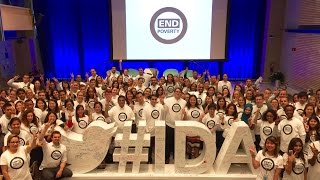
October 17, Washington, DC - On the Day of Ending Poverty, graduate and undergraduate students were invited to participate in an open debate and conversation with development experts on big questions: What does “ending poverty” mean? Is it really possible? How much does inequality matter and how can it be reduced? What role do we all play? Pabsy Pabalan talks to some of the students to know more about the development issues they care about.

Read more ➤